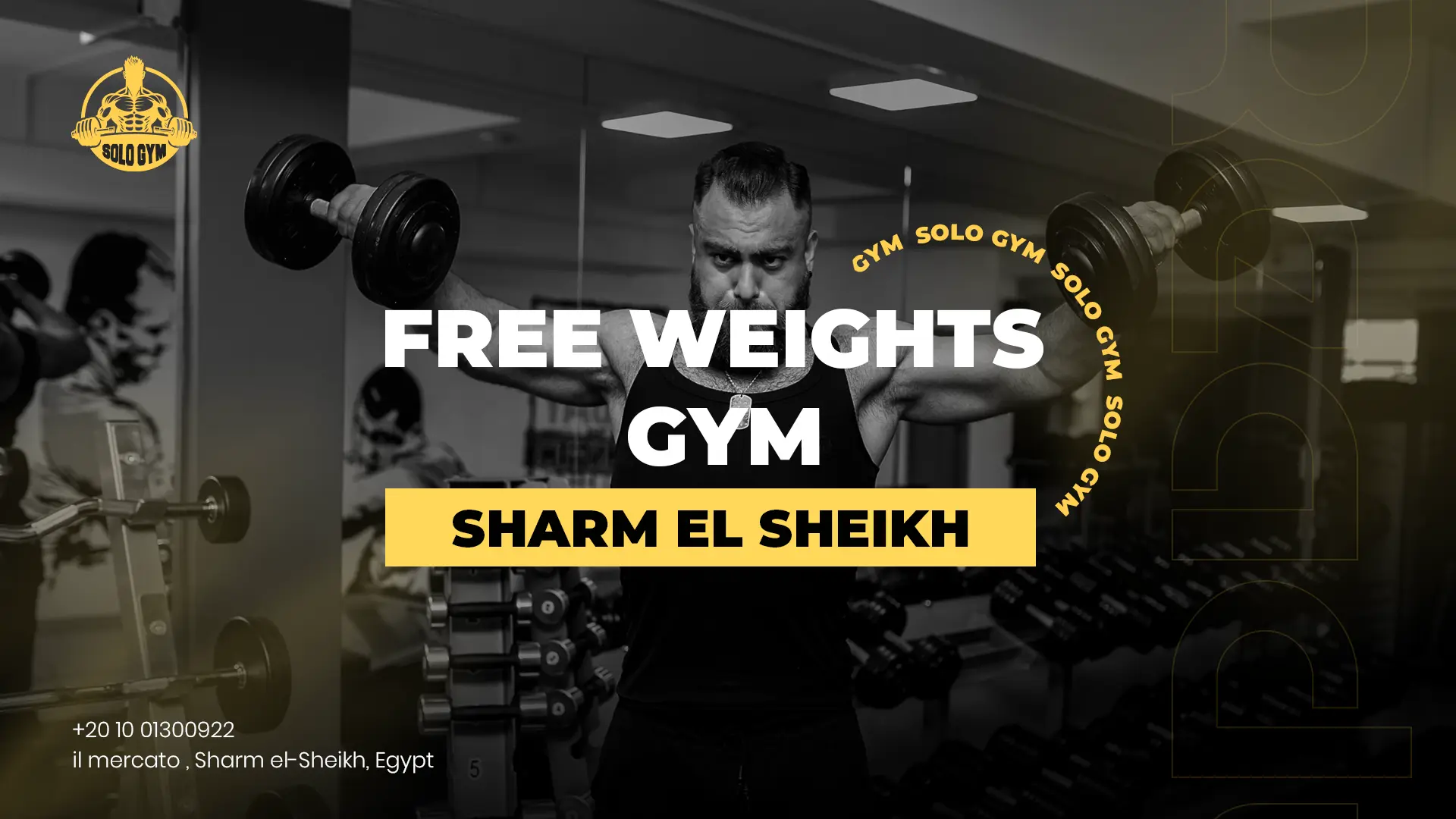
Free weights can build strength, develop muscle and improve movement control. Useful training requires stable technique, an appropriate starting load and gradual progression, not simply a heavy dumbbell. Solo Gym Sharm combines free weights, resistance machines and guidance for different experience levels. Choosing a free weights gym Sharm El Sheikh with flexible access and suitable equipment supports consistent training.
Why Choose a Free Weights Gym in Sharm El Sheikh?
Free weights support full-body, bodybuilding and general strength programmes. Dumbbells and barbells offer different grips, stances, loads and exercise angles.
A suitable free weights gym Sharm El Sheikh should provide:
- A useful range of weights for gradual progression
- Stable benches and organised training areas
- Space for pressing, pulling and lower-body exercises
- Machines for complementary work
- Coaching support for unfamiliar movements
- Opening hours that match your weekly schedule
- Membership options suited to your expected training period
Visit before joining and check whether your essential weights and setups are practical to use.
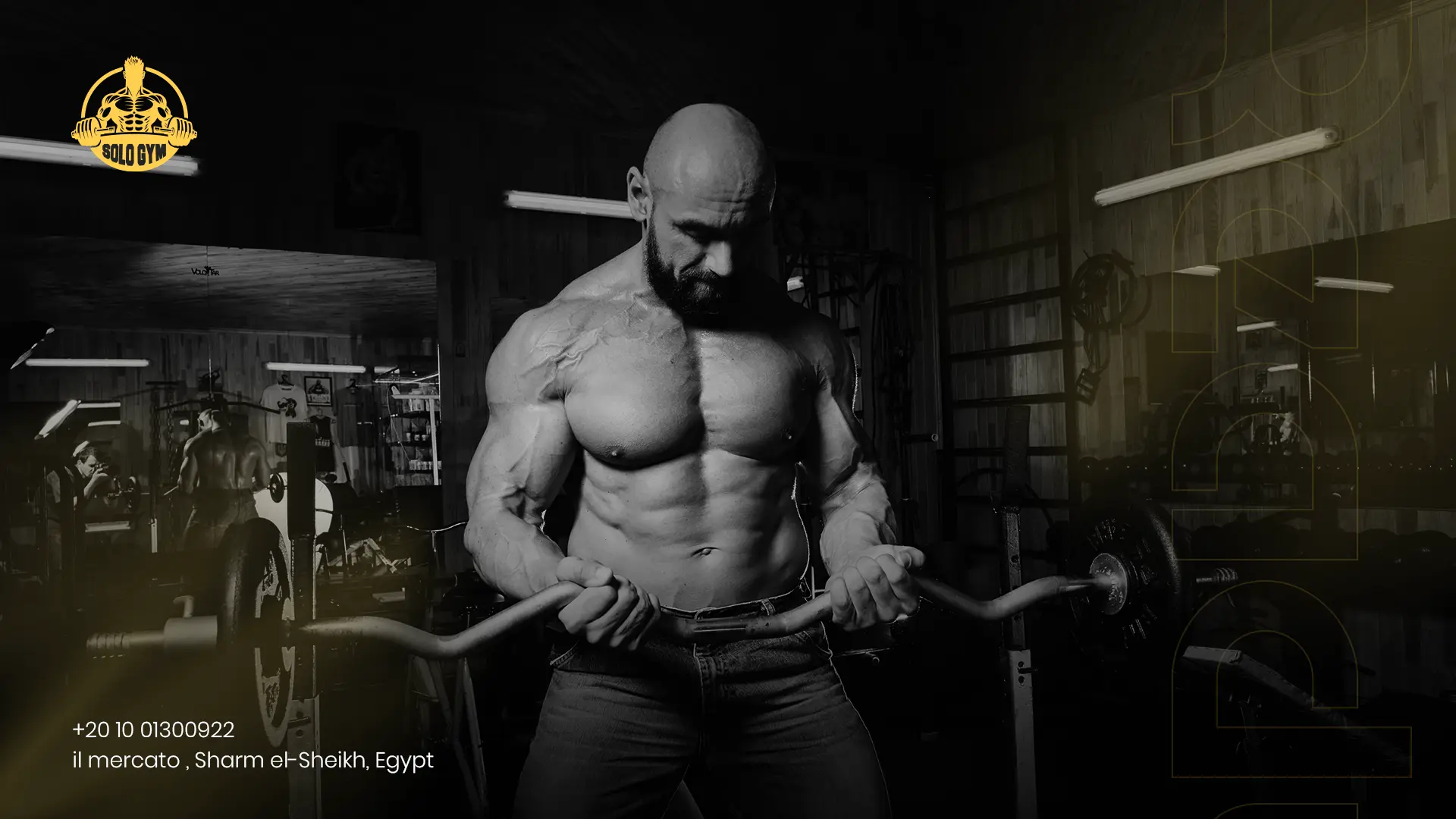
Explore the Free Weights Area at Solo Gym Sharm
Solo Gym provides free weights, strength machines and space for compound or isolation exercises.
Before starting, look around the area and identify:
- The dumbbell range and storage layout
- Available benches and their adjustment options
- Spaces intended for larger free-weight movements
- Machine or cable alternatives
- Weight-return locations
- How much room you need to exercise without blocking others
A visit to a free weights gym Sharm El Sheikh works better with planned alternatives. If equipment is busy, use a substitute that preserves the workout’s purpose.
Build Strength with Dumbbell and Barbell Exercises
Dumbbells and barbells train similar patterns differently. Dumbbells let each side work independently, while barbells can simplify loading larger movements.
Your programme might include:
- Dumbbell or barbell pressing variations
- Rows for the back and arms
- Squat or split-squat patterns
- Controlled hip-hinge exercises
- Overhead pressing when suitable
- Loaded carries or other functional strength movements
Choose variations that fit your mobility and goal. Heavy barbell work is not compulsory; a controlled exercise you can progress is more useful than a poorly performed lift.
If you are unsure which option to use, compare how securely you can set up, control the full repetition and repeat the movement across several sets. The exercise name matters less than your ability to perform it consistently and improve it without losing form.
Train Every Major Muscle Group with Free Weights
A balanced programme covers major movement patterns instead of only the chest and arms. Free-weight training can include:
- Chest and triceps work through presses
- Back and biceps work through rows and other pulls
- Shoulder training with presses or raises
- Quadriceps work through squat and split-stance movements
- Hamstring and glute hip-hinge work
- Core and grip exercises
You do not need to train every muscle with free weights. Use the tool that best fits the movement.
Free Weights Workouts for Beginners and Experienced Lifters
Experience should shape complexity and workload. Beginners need practice; experienced lifters may use specialised variations.
A beginner session may include:
- A controlled lower-body exercise
- An upper-body press and stable pull
- A simple hip-dominant exercise
- Optional core work with planned sets and rest
An experienced programme may include:
- Different strength and muscle-building repetition ranges
- More advanced compound variations
- Targeted volume and planned lighter weeks
- Performance targets based on a training log
A good weight lifting gym Sharm El Sheikh should support both approaches without making beginners feel that they must copy advanced members.
Improve Balance, Stability and Functional Strength
Free weights require load control rather than a fixed machine path, challenging balance, grip and trunk stability in suitable movements.
Control Before Complexity
Choose a stable position and manageable weight before adding speed or complexity.
Use One-Sided Exercises When Appropriate
Single-arm rows and split squats train each side separately but still require suitable control.
Transfer Strength to Everyday Movement
Pressing, pulling, squatting, hinging and carrying can support general physical capability.
Functional does not mean complicated. The exercise should have a clear purpose within your programme.
Combine Free Weights with Resistance Machines
Machines provide a guided path and stability, while free weights offer more movement options and demand control. A mixed session could:
- Begin with a demanding dumbbell, barbell or machine compound exercise
- Continue with another movement for a different muscle group
- Use machines for stable, targeted work
- Add cable or isolation exercises when relevant
- Finish after completing the planned volume
The right free weights gym Sharm El Sheikh lets you match equipment to the task without assuming one type is always superior.
How to Use Free Weights Safely and Correctly
Safe training begins before the first repetition. Check your surroundings, equipment and starting weight. Follow these practical steps:
- Warm up with suitable lighter practice sets
- Check the bench, collars and surrounding floor before lifting
- Keep weights away from walkways
- Use controlled repetitions instead of bouncing or throwing the load
- Stop the set when technique changes significantly
- Use a spotter or appropriate setup for difficult lifts
- Return dumbbells and plates after use
- Avoid attempting another member’s working weight
A trainer can demonstrate setup. Stop for sharp or concerning pain and seek appropriate medical advice when needed.
For lifts performed beneath a bar, learn the safety setup before increasing resistance. Confirm rack height, available supports and the correct way to leave the exercise if a repetition cannot be completed.
Create a Progressive Free Weights Training Programme
A programme makes workouts measurable. Define your training days, movements and signs of progress. Progress may involve:
- Adding controlled repetitions within a target range
- Increasing the weight by a small amount when ready
- Improving range of motion or execution
- Completing planned sets consistently
- Adding limited volume when recovery allows
- Requiring less help with setup or balance
Record working sets and change one variable at a time. A free weights gym Sharm El Sheikh programme should remain stable long enough to evaluate. Review it when progress, schedule or recovery changes.
Avoid Common Free Weights Training Mistakes
free weights gym Sharm El Sheikh reward control and patience. Rushing makes progress harder to measure:
- Choosing weight to impress other gym members
- Adding load before controlling the current resistance
- Copying advanced exercises without understanding the setup
- Using momentum to complete every repetition
- Changing movements too frequently
- Neglecting major movement patterns
- Training to complete failure during every set
- Leaving weights where they create a hazard
- Ignoring recovery and accumulated fatigue
- Continuing through sharp or unusual pain
The best set serves the programme; it is not automatically the heaviest one. Solo Gym Sharm offers free weights, machines, personal coaching and 24/7 access. Visit Il Mercato Street, next to Vodafone, ground floor, to see the strength area.
FAQs
Are free weights suitable for complete beginners?
Yes. Beginners can start with manageable dumbbells and stable exercises while learning setup and technique with suitable guidance.
Are dumbbells better than barbells?
Neither is always better. The right choice depends on the exercise, your experience, available equipment and the type of progression you need.
How often should I train with free weights?
Many beginners start with two or three weekly sessions, but frequency should reflect programme design, recovery and other physical activity.