Powerlifting focuses on the squat, bench press and deadlift. Improving them requires repeatable technique, planned workload, sensible progression and recovery, not lifting heavily whenever you feel strong. A powerlifting gym Sharm El Sheikh should let you practise the main movements and measure performance. Solo Gym Sharm provides free weights, machines and coaching for structured strength development.
Why Choose a Powerlifting Gym in Sharm El Sheikh?
A powerlifting programme prioritises consistent practice of the main lifts and accessory work for individual weaknesses. A suitable powerlifting gym Sharm El Sheikh should offer:
- Free weights and stable equipment for heavy strength work
- Benches and suitable spaces for compound exercises
- Enough resistance for gradual progression
- Machines and cables for accessories
- Enough setup space
- Flexible opening hours for longer sessions
- Coaching support for technique and programme planning
Visit before joining and check whether the equipment, space and access suit your programme.
Discover the Strength Training Environment at Solo Gym Sharm
Solo Gym offers free weights, machines and space for compound or isolation work, supporting the main lifts and accessory training.
When visiting the strength area, check:
- Where you can perform your main compound movements
- Suitable benches, weights and accessories
- How weights and equipment are organised
- Whether you can train at your preferred time
- When personal coaching is available
The gym is open 24/7, giving residents and visitors more scheduling freedom. Arrange trainer-led work according to coach availability.
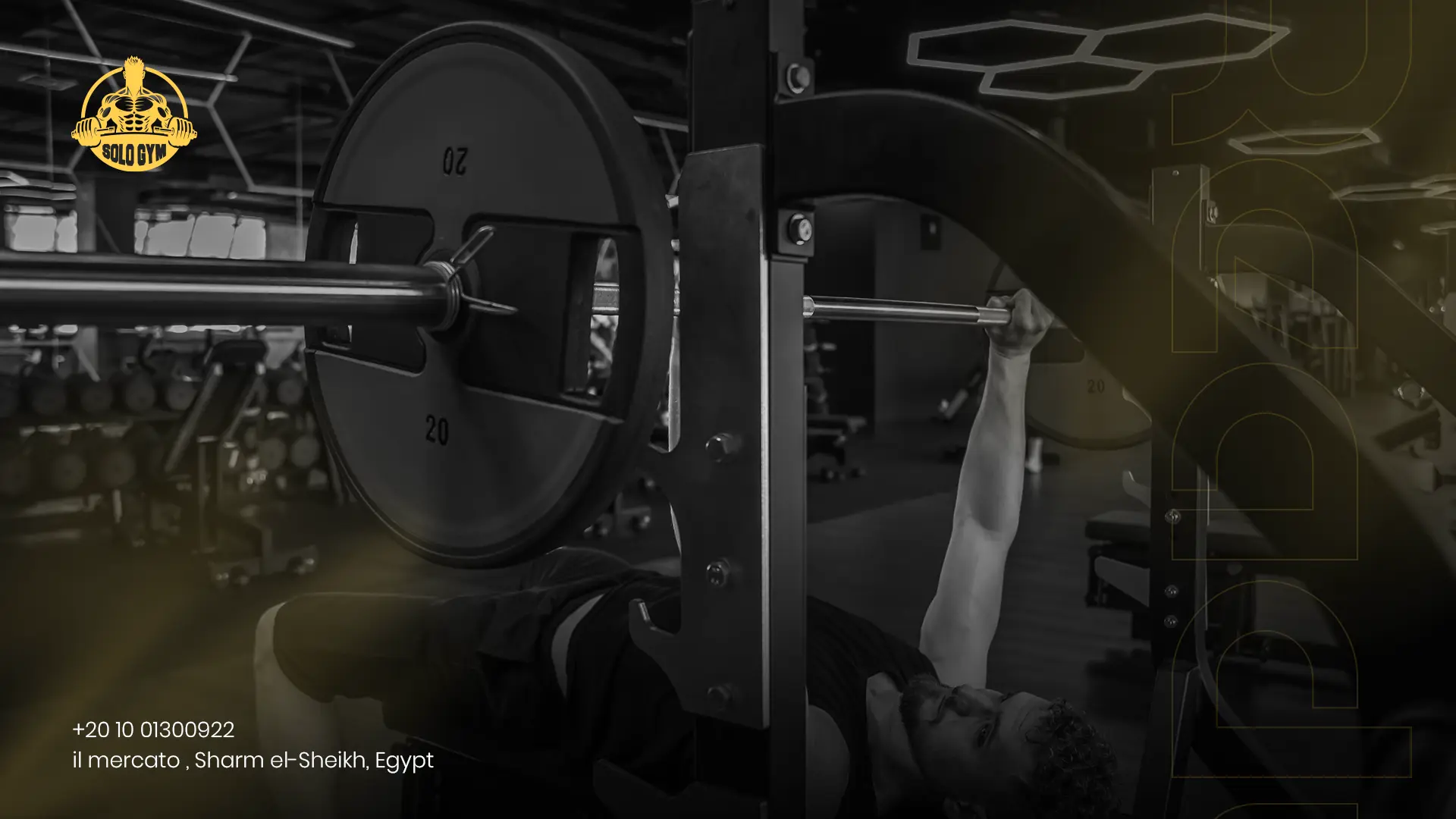
Train the Squat, Bench Press and Deadlift
Each competition lift requires a stable setup and consistent execution. Select variations according to mobility, experience and goals.
Build a Repeatable Squat
Set rack height, create a stable stance and use controllable depth. Repeat the setup so performance remains measurable.
Develop a Stable Bench Press
Position yourself securely, organise your grip and control the bar path. Use suitable spotting for challenging loads.
Strengthen Your Deadlift Technique
Approach consistently, create tension and control the load. Do not turn training repetitions into maximum attempts.
If a lift causes sharp or concerning pain, stop and seek appropriate professional advice rather than forcing the movement.
Follow a Structured Programme to Increase Your Main Lifts
A programme defines lift frequency, variations, accessory work and progression across the week.
Accessory exercises should address a purpose, such as strengthening the upper back, legs, triceps or trunk. They should support the main lifts without creating so much fatigue that the next important session suffers. Review their value through performance, not soreness alone.
Your programme may include:
- Weekly squat, bench press and deadlift exposure
- Main working sets with planned repetitions and resistance
- Technique variations for specific weaknesses
- Accessory exercises for the legs, back, chest, shoulders and arms
- Suitable rest periods
- Planned volume, intensity and easier weeks
A powerlifting gym Sharm El Sheikh programme should fit your schedule. Three reliable sessions beat five workouts you rarely complete.
Develop Proper Powerlifting Technique and Control
Technique gives meaning to your log. Different stances, ranges or bar paths make strength changes harder to judge.
Focus on:
- Using the same setup cues for each working set
- Controlling the lowering phase where the lift requires it
- Maintaining balance through the intended points of contact
- Keeping the bar path repeatable
- Stopping when control changes significantly
- Recording technique notes
- Selecting variations that match your current ability
Focused coaching avoids too many corrections at once. Technical changes need practice before heavier resistance.
Use Progressive Overload to Build Maximum Strength
Progressive overload raises the challenge over time without adding weight every session. Strength progress can appear in several forms.
You may progress by:
- Adding resistance while maintaining the planned technique
- Completing more repetitions with the same load
- Performing the same work with less effort
- Improving pauses, control or bar speed
- Completing all planned sets more consistently
- Handling greater weekly volume when recovery allows
Keep increases measurable. A powerlifting gym Sharm El Sheikh session should build future performance, not become a test day.
Improve Mobility, Stability and Bracing for Heavy Lifts
Mobility should support the required lifting positions. You need usable range and stability, not maximum flexibility.
Prepare for demanding lifts with:
- A warm-up that raises readiness without fatigue
- Session-specific movement practice
- Lighter sets that gradually approach the working weight
- Bracing practice before the bar becomes heavy
- Stable contact points and suitable variations
Bracing creates trunk tension for force transfer and should be learned with manageable resistance. Seek medical advice before heavy lifting if you have a relevant condition.
Powerlifting Training for Beginners and Experienced Lifters
Beginners and experienced lifters train similar patterns but need different complexity and workload.
Beginners can prioritise:
- Learning consistent setup and movement control
- Training with manageable resistance
- Repeating useful exercises and building full-body strength
- Recording sets, repetitions and simple technique notes
Experienced lifters may use:
- Competition-style practice at varied intensities
- Variations selected for individual sticking points
- Detailed volume and fatigue management
- Performance reviews across longer training blocks
A powerlifting gym Sharm El Sheikh should support both levels without encouraging beginners to copy advanced loads.
Essential Safety Practices for Heavy Strength Training
Heavy training needs equipment checks, suitable loading and an exit plan for failed repetitions.
Use these safety practices:
- Check the bar, bench, collars and training space before loading
- Learn how safety supports or rack features work
- Use a capable spotter when the lift requires one
- Warm up through gradual practice sets
- Keep equipment away from walkways
- Avoid unplanned maximum attempts
- Stop when pain, dizziness or other concerning symptoms appear
- Return weights after completing the exercise
Agree on spotting instructions before the set instead of assuming someone will notice a problem.
Plan warm-up jumps before loading the bar. Large, unplanned increases can leave you unprepared for a working set, while too many tiring warm-ups may reduce performance. Use enough preparation to feel ready without turning the warm-up into a second workout.
Track Your Performance and Break Through Strength Plateaus
A plateau requires several weeks of evidence, not one poor session. Sleep, travel and stress affect daily performance. Track:
- Load, repetitions and completed sets
- Perceived effort for important working sets
- Technique notes and rest periods
- Body weight if relevant to your category or goal
- Fatigue, recovery and block performance
When progress stalls, review technique, workload and recovery before adding heavy sets. A coach at a powerlifting gym Sharm El Sheikh can identify whether you need practice, smaller progression, an easier week or programme change.
Start Powerlifting Training at Solo Gym Sharm Today
Solo Gym Sharm offers free weights, machines, coaching and 24/7 access. Visit Il Mercato Street, next to Vodafone, ground floor, to inspect the strength area.
Call or WhatsApp +20 100 130 0922, or email info@sologymsharm.com. Tell the team you are looking for a powerlifting gym Sharm El Sheikh, share your experience and ask about current membership and coaching options. Begin with repeatable technique, follow a structured programme and let patient progression build your strength.
FAQs
Can beginners start powerlifting training?
Yes. Beginners can learn squat, press and hinge patterns with manageable resistance before progressing towards more specific powerlifting work.
How often should I practise the main lifts?
Frequency depends on experience, programme design and recovery. Many lifters train three or four days weekly, but not every session is equally heavy.
Should I attempt a one-repetition maximum regularly?
No. Frequent maximum attempts can create fatigue without providing enough productive training. Test heavy performance only when it serves a planned programme.